
They surrounded the castle with a moat, which makes the castle a unique example of a plain castle in Slovakia. One of his strategic tasks was to control an important trade route called the Via Magna. The first written mention of the castle named Wywar dates from 1341, in later documents it is also mentioned as Novum Castrum – New Castle, or Hrádek. In 1399, Emperor Sigismund personally visited Luxembourg Castle and slept here. In 1433 it was conquered by the Hussites, later it was occupied by the Jiskrovci. Throughout its history, the castle often changed owners.

Valentín Balaša was an important figure in the castle. Balaša came from the leading noble Hungarian family of Balašov. He was born in Zvolen and spent his childhood and youth mainly in the castle in Liptovský Hrádek. At Hrádek and its estate, he adopted Slovak colloquial language and local customs. He was provided with a quality education – he spoke up to eight languages. He studied at a university in Germany, then traveled a lot and led a turbulent life. He became a well-known anti-Turkish fighter. After his father’s death, he returned to Hungary and at the end of the 1670s, he lived again in the Liptovský Hrádok castle, which he liked very much. He led several legal disputes with his own family, due to ancestral properties.

Together with his brother František, they took care of the restoration of the castle. Later, Valentín returned to battle again, was seriously wounded and died as a result of his injuries at the age of 40 in 1594 in Ostrichom. He is buried in the family tomb in Hybia. Valentín Balaša was also the first significant representative of Renaissance poetry in Hungary. He wrote in Hungarian, Turkish and Slovak.
In 1600 Mikuláš Šándorfy received the castle and estate. He married the young lady of the castle, Magdalena Zai, the widow of the previous owner. At the initiative of Šándorfy and his wife, between 1601 and 1603, a Renaissance mansion and other buildings were built around the castle to ensure the running of the estate.
On the first floor of the mansion, they set up representative rooms for the owners and their guests, and on the ground floor there were warehouses and accommodation for servants. The manor transformed a medieval, uncomfortable Gothic castle into a luxurious Renaissance mansion. Mikuláš Šándorfy did not live to see the completion of the reconstruction, he died in 1603. After the death of her second husband, Magdalena Zai legally secured the position of owner of the castle by marrying other suitors for the property. Although she was one of the few women who owned the Castle and Manor, she lived in it the longest of all the owners – more than 30 years.

For many centuries, Hrádok was apparently a safe place, as in March 1622, the crown of Saint Stephen was kept here for a short time.
The castle withstood all the waves of anti-Habsburg uprisings and played an important role in them, either as a defensive fortress or as a base for troops. During this period, it was conquered and destroyed several times. However, the owners no longer favored him. They were just maintaining it. Later, at the beginning of the 18th century, Emperor Leopold I donated the castle and estate to Prince Lichtenstein.
In 1731, the castle and the estate were bought from Emanuel Lichtenstein by the royal chamber. Since then, the castle and the estate have been declining.
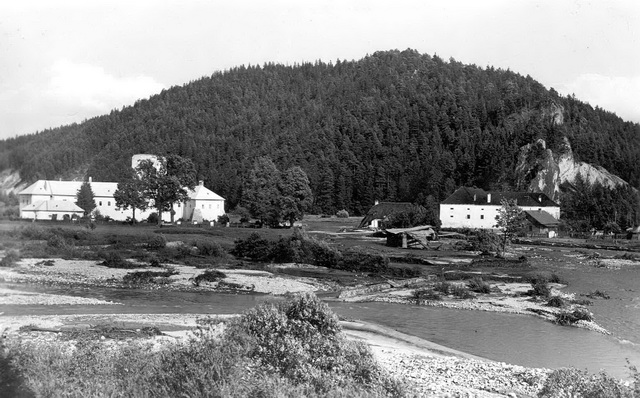
After the devastating fire of the castle and manor house in 1803, only the manor house was rebuilt and the castle has been in ruins ever since. But it didn’t stop at this disaster. In the rainy summer of 1813, a catastrophic flood occurred.
In the second half of the 19th and the beginning of the 20th century, the premises of the manor housed the District Court as well as the Hungarian Royal Forestry Office. From 1960 until the Gentle Revolution, the Ethnographic Museum of Liptov was located here. The ruins of the castle and the slowly crumbling manor have troubled the minds of people who were not indifferent to the fate of Liptov’s monuments since the 1930s. In this period, the first association of volunteers taking care of the castle in the former Czechoslovakia was even established here – the Society for the Rescue of Hrádok Castle.

However, this complex of monuments could not be reconstructed either in the period of the first republic or in the period of socialism. During the time of socialism, only archaeological and art-historical research was carried out under the leadership of prof. Gejsa Balaš. The dilapidation of buildings continued in the 1990s, and locals and tourists were troubled by the sight of crumbling buildings. Since 1989, the premises have been abandoned, unheated, exposed to unwanted visitors and everything that could be taken was stolen. All that remained were bare walls without windows and doors.
In 2001, when Ing. Dagmar Machová visited the ruins of the castle and the ruins of the manor, the vision of restoring and reviving this manor was born in her mind.

At the end of the year, the company Mr. Machovéj – Avans s.r.o., bought the grounds of the castle and mansion from the Liptovský Museum, thereby expanding the company’s activities. At the time of purchase, there were no funds available.
The reconstruction took place in stages:
Year 2002:
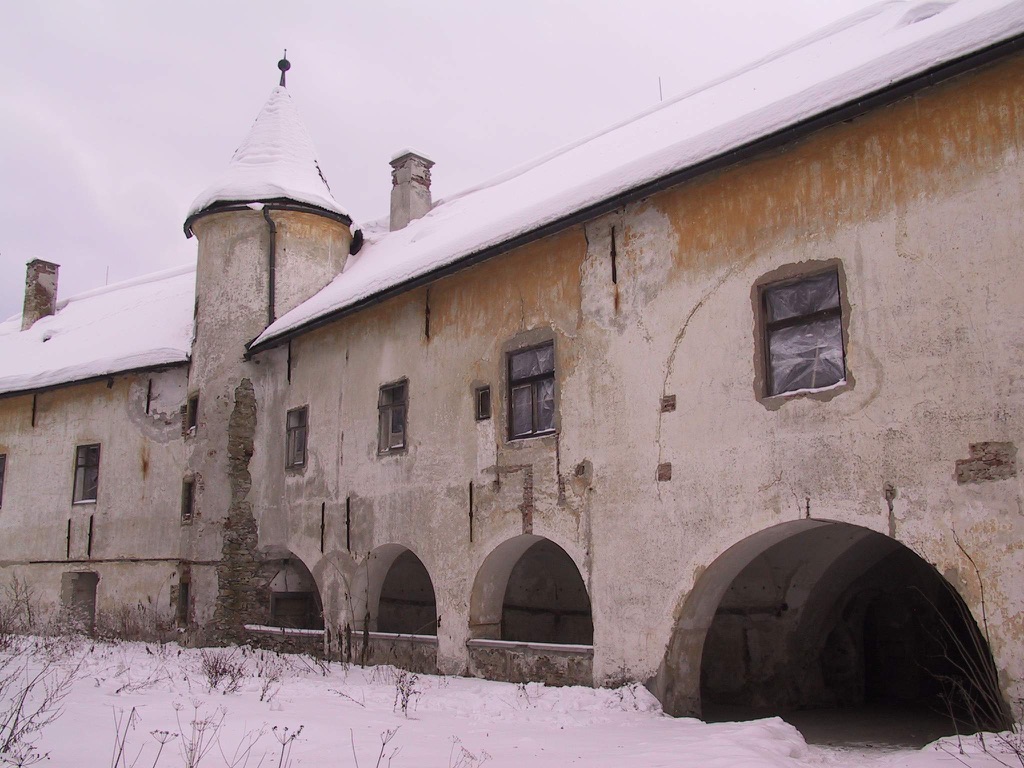
Ing. helped design the architectural solution. arch. Katarína Smrečanská, born Alexa. This was followed by the obtaining of a building permit and thorough remediation against moisture, the removal of broken statics, the introduction of utility networks and the heating of the west wing. Conservation of the walls of the castle ruins was carried out from the point of view of safety, so that the falling rocks would not endanger the construction work.
Year 2003-2004:
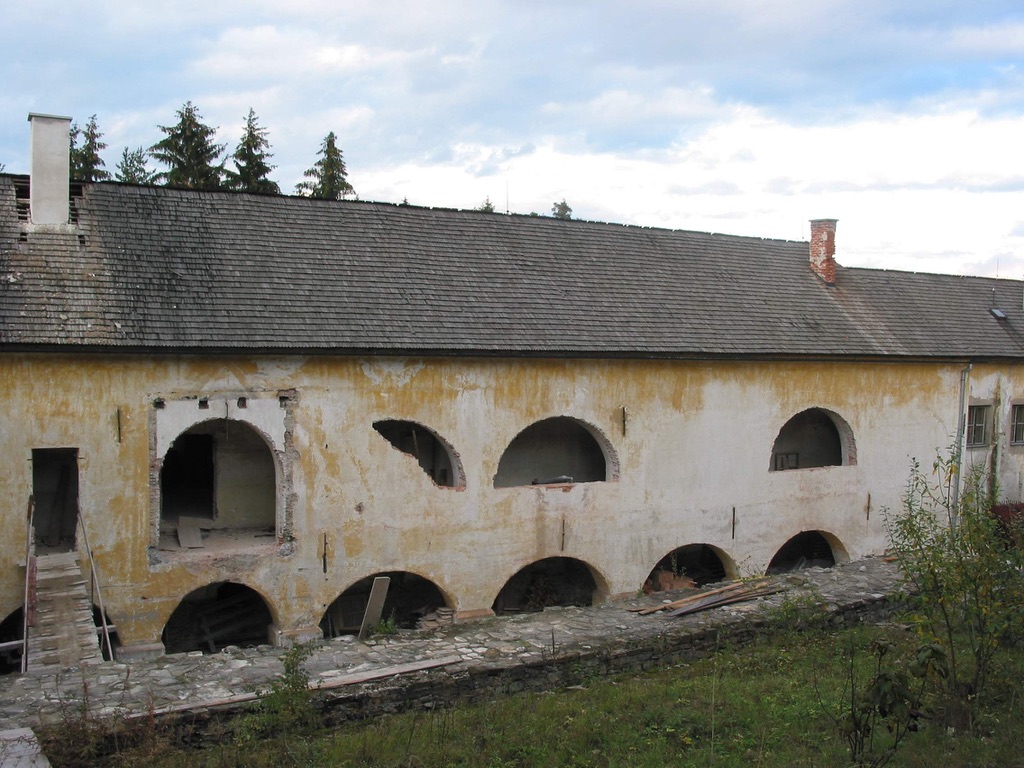
Reconstruction, renovation of the roof, planting of the park, paving of the courtyard, restoration of wells and Renaissance arcades in the corridors of the mansion, purchase of antiques and equipment. Opening of the “Grandcastle Hotel and Restaurant” business.
Year 2005 – 2012:
Reconstruction of the wellness area with a pool and the Stone Gallery hall, renovation of rooms, reconstruction of rooms and apartments.
Year 2012 – 2022:
During this period, work was underway on the restoration of the old Gothic castle. The ground floor of the western tower was reconstructed and the castellan’s room was made available. So far, the last reconstructed part of the old castle is the eastern tower, in which the castle chapel was established. In the near future, we plan to open the floor of the western tower, where work is still ongoing.
You will learn more information and interesting facts about the history of the castle, both older and newer, on a tour of the Castle and Manor from our guides.
You can listen to Mrs. Machová’s story of how she came to buy the Castle and the Manor in the RTVS archive at this link.
